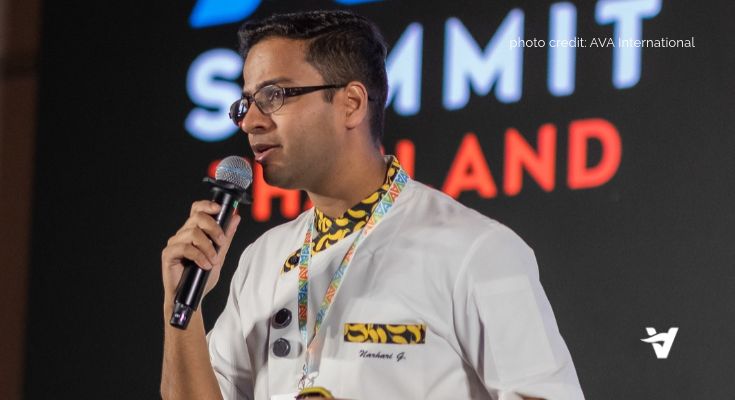
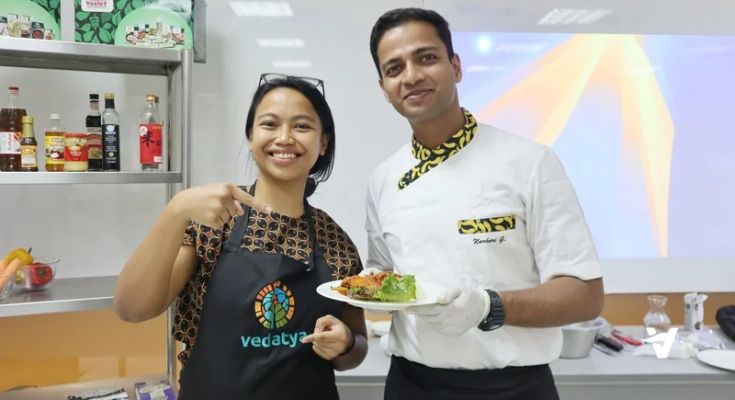
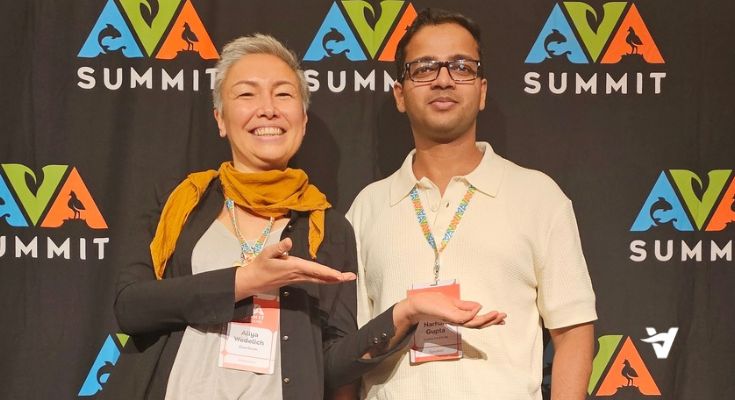
I met chef Narhari Gupta at the AVA Summit in Bangkok in October 2026, where he was part of a panel discussion with other plant-based chefs from Asia. I was immediately hooked by his vision for changing India’s eating habits from the inside out.
Narhari is a plant-based chef, culinary educator, and founder of the Luma Institute in India. After training at top culinary schools in Mumbai and working in Michelin-starred kitchens in Copenhagen, he traded traditional fine dining for full-time plant-based advocacy. Today, through the Luma Institute, he’s working to connect innovative plant-based brands with everyday restaurant kitchens by training chefs and hospitality pros across India and the Global South.
In the corridors of the AVA Summit, I had the pleasure of talking with him about his journey, plans, and recipe for a kinder world.
Aliya Wedelich for Veganstan News

From Culinary School to Michelin-Starred Kitchens
Let’s start from the beginning—how did you become a chef?
Narhari Gupta: My journey to becoming a good chef started very early on when I was in school. I used to watch a lot of cookery shows and was really inspired by them—maybe a bit too much, because I decided that in the future I wanted to do something with food professionally.
I had a few arguments with my family because they wanted me to pursue engineering, and I said, “No way, I’ve already decided I need food in my life and in my career.” That’s when I decided to join a culinary school and hospitality college in Mumbai, where I received my professional chef’s training and hospitality training.
That’s where it all actually started. I feel that a chef’s career and kitchen environment are very competitive in nature; the ones at the very top are extremely competitive. So, I was in that same race just to meet the best chefs, train under the best, and be in the best kitchens in the country. I got to experience some of the best restaurants in India and later decided that we needed more skill sets on our plate.
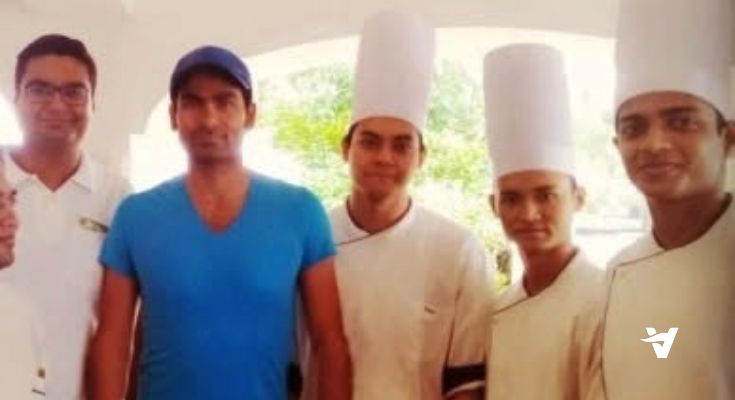
That’s when I decided to explore Copenhagen, which I think is the Mecca of modern gastronomy. I got a chance to train in a Michelin-starred restaurant, Restaurant 108, which was a sister restaurant of Noma—a restaurant coined as number one in the whole world for five years in a row. Restaurant 108 was basically a branch emerging from that place, and I thought, “Okay, these are some of the best people who know food and know exactly what they are doing.”
That was the peak of my experience, because getting there is one thing, but working with those people is a totally different dimension. I had to reach there at 8:00 a.m., and it wasn’t just arriving at 8:00—they also had an adjacent coffee shop with a huge line of people waiting, so I had to get there and immediately start cooking. And you won’t believe when I left the place: 2:00 a.m. at night. From 8:00 a.m. until 2:00 a.m., you are doing physical cooking, cleaning, and everything else.
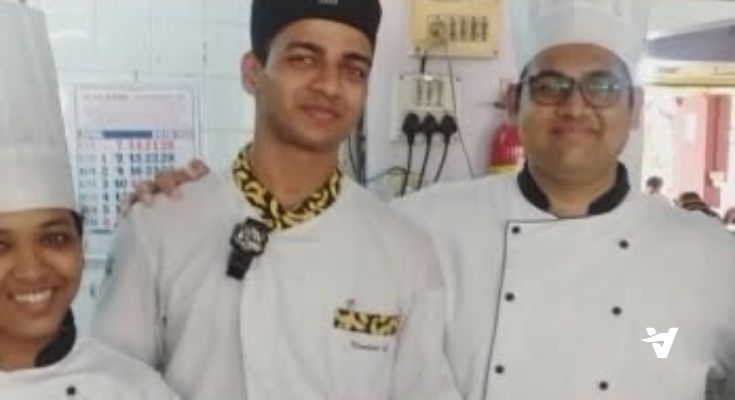
It was so extreme, and I think it prepared me for the best. Nothing can tear my motivation down after that chef’s training. I learned a lot of things and made some decisions that took me in a different direction, but I still really admire that experience.
The Turning Point to Veganism
What made you turn vegan, and how—after having reached the top of your profession—did you find the courage to actually pursue vegan culinary art?
Narhari Gupta: Yes, that’s another interesting story, and it was running parallel alongside my passion for becoming the best chef.
When I was in college, a vegan activist used to come and talk about veganism and conduct vegan cooking competitions. Being an opportunist, I used to enter all competitions to experience everything. Every year I participated, and I realized it was a whole different set of food. I also remember making fun of that lady because I was on the other side of the fence—I was naive and young at that time. Later, I realized that the concept of veganism had something very interesting to provide to the food sector.
Later, I attended a session by the Good Food Institute just as they were launching in India. They were talking about how Indians who are earning more are aspiring to eat more and more meat. I connected that to what was happening in my college: students were coming in from different parts of the country who didn’t consume meat at all, or maybe consumed it once or twice a week. Yet, on day one of culinary school, we are taught that meat is the center of the plate, and vegetables and other things are side dishes.
When the college served meals to hostelers—breakfast, lunch, and dinner—it was all meat-based, egg-based, and dairy-based. I realized that students who previously ate meat once or twice a week were now eating meat and eggs 21 times a week. That’s a massive increase in consumption, and these are the students who will be leading the food system in five or six years as soon as they receive decision-making power.
That is the truth of the current hospitality system: it has been driven by the meat and dairy industry from the very core, starting at the education level.
I did research on this and presented it to the principal and faculty members, saying, “This is wrong, this is so wrong.” The title of my report was “Meat is Special, Not Staple,” because the colleges were trying to make meat a staple part of the Indian diet. That was the second incident after the culinary competitions.
Later, I watched two documentaries back-to-back: The Game Changers and Cowspiracy. Then I realized, “Okay, it all makes sense. I don’t want to do this. Things need to stop right now, right away.” Within just four hours of watching those two documentaries, I decided I would do anything in the world rather than go back to butchering animals.
I realized I went into the food industry for art and creativity, yet when I looked at myself in the past, I was butchering massive animals into small pieces and chunks, which is so horrible.
The industry misuses the passion of young people and puts them into the system blindfolded. All of these thoughts were running through my mind, and I asked myself, “Okay, what next? What do I do next?” That is the journey of how I turned vegan.
Entrepreneurship, Burnout, and Choosing Ethics
And then you started your own enterprise?
Narhari Gupta: As soon as I turned vegan, I realized nobody was going to hire me as a chef, because as a chef you have to deal with animal products, and there were no vegan restaurants or vegan segments in any restaurant or hotel. Since I had already invested so much skill into learning food and hospitality, I decided to start my own vegan food service business.
When I ran that business, I realized something very interesting about the Indian market: about six or seven years ago, a lot of food product brands had released amazing innovations—great alternatives to chicken, mutton, kebabs, dairy, and butter. Sadly, none of these products were appearing on restaurant menus. It made me so sad because they were so innovative; I bet no one out there would be able to recognize it wasn’t real chicken.
So, I took a pledge to make sure these products appeared on menus and reached the end consumer. I curated a menu encapsulating more than 25 brands without charging any of them. I told them, “You’re launching a product—give it to me, I’ll make something out of it, take feedback from consumers, and give it back to you.”
I was trying to bridge the gap, which was very energy-consuming. Honestly, it was a passion project, not a business for profit.
I ran it for two and a half years, and then I burnt out, realizing I couldn’t do it alone. I was literally sleeping in the kitchen alone 24/7 while the kitchen was open 24/7. Whenever an order came in, I would wake up from my sleep and start preparing food because the mission was getting those products out there for people to try.
During those two years, I got so much pressure from other people asking, “Why are you doing only vegan? Why don’t you start meat, or why don’t you start vegetarian?” Eventually, I thought, “Okay, let me try that.”
Because I’m alone, making my own decisions, and under pressure that things aren’t working without meat on the plate, I created a separate, delivery-only brand overnight called Nashville Hot Chicken alongside my brand Snill Foods. You won’t believe it: in just two months, I made more profit than I had earned in two and a half years—without any marketing. Meat sells on its own, whereas for plant-based, you have to put in a lot of sweat, strategy, blood, and tears.
Then I reached a point where I had to decide: do I move forward ethically, or do I move forward purely economically? After a lot of crying, thinking, and sobering reflection, I decided to go with ethics. I shut everything down—no Snill, no Nashville Hot Chicken—and moved on to the next phase.
Building the Ecosystem & Grassroots Activism
Narhari Gupta: Next, I received an invitation from the Ministry of Food Processing for a gathering of people working in the plant-based industry.
I attended that meeting and saw so many of my inspirations leading the movement sitting right next to me, discussing strategy for plant-based in India.
That was actually the day the Plant Based Foods Industry Association in India was formed, and it was the starting point of the plant-based boom in India.
Somehow, the executive director found me and hired me as the first employee of the association. In just one year, alongside organizations like the Good Food Institute bringing in food science and nutrition expertise, we saw the Indian plant-based landscape grow from 50 brands to 500 brands. Major brands like Nestlé, ITC, and Tata jumped into the market.
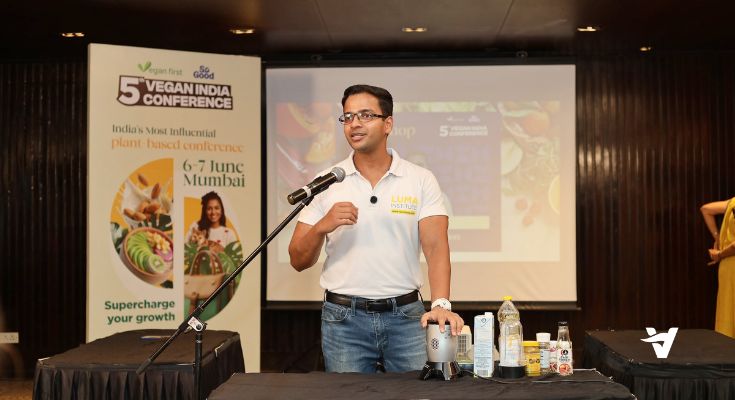
I worked with the association for three years, and it was amazing because you get a bird’s-eye view of the entire [plant-based food] ecosystem in India and neighboring countries. Brands would launch a product and present it to us first, and I felt like I was living my dream job—making sure everything went well. We were organizing mega-conferences with 1,500 to 2,000 attendees, including stakeholders, decision-makers, government institutes, and massive exhibition pavilions.
Yet, despite the boom, the same problem persisted: none of these products were making it onto restaurant menus.
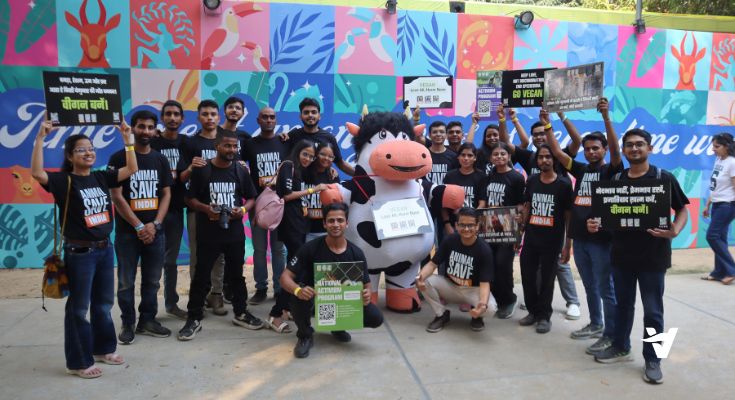
After three years, I decided to explore more and landed a role as National Coordinator at Animal Save India, one of the fastest-growing animal rights organizations after PETA. I wanted to experience what was happening on the ground. I worked with over 1,000 activists, motivating them, leading street protests in the rain, and organizing National Animal Rights Day (NARD), where we conducted 50 events on the same day across 50 different cities.

Is this what you’re still doing with the NGO, or have you moved on?
Narhari Gupta: I moved on from there, yes. Alongside my activism role, I was also leading the culinary transformation program for Animal Save India in collaboration with the Veg Voyages Foundation. We trained hospitality professionals and students across the Global South—in India, Bhutan, Nepal, and Sri Lanka. Over two years, I trained more than 5,000 hospitality professionals. Everywhere I went, I was living my dream job, traveling, meeting people, and eating great vegan food.
Founding the Luma Institute
Narhari Gupta: Eventually, I realized I was putting my attention into too many different things. I had gathered experience from many places, and it was time to focus on what my skill set is and what the movement truly needs.
The problem I identified seven years ago was still the same: plant-based products were not appearing on menus because chefs simply didn’t know they existed. Chefs work in their silo, and plant-based brands work in theirs, with no one connecting the bridge.
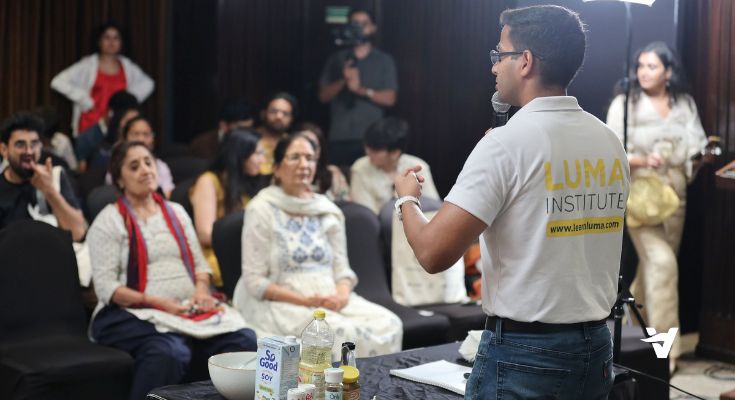
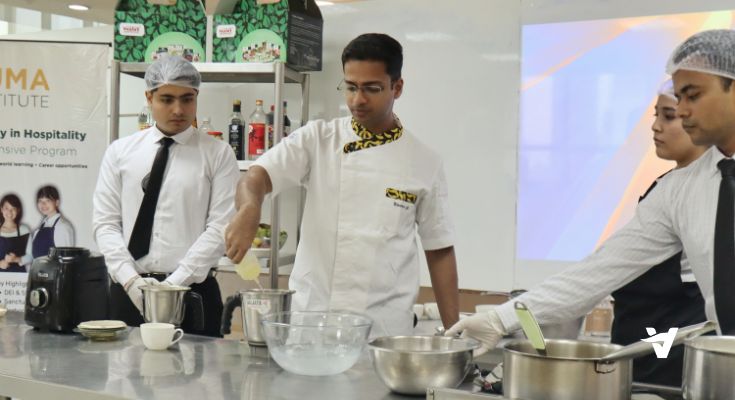
That’s when we founded the Luma Institute a year and a half ago. Because of the connections I had built throughout my journey, people were excited and supportive. We launched our first flagship program: an intensive five-day training program for hospitality students and professionals.
In spring 2025, for its very first round, we selected students and chefs from all across India for a five-day immersion—two days of lectures, followed by a third day visiting a mega-factory of plant-based foods. The students’ reactions were incredible; they were thrilled to explore this side of the food world that nobody talks about.
Are they all now acting chefs in restaurants, meaning many restaurants now have chefs who can cook plant-based and cater to vegan tastes?
Narhari Gupta: Yes. I believe all chefs can cook vegan—it’s just a matter of how much stake they have in the process. If they don’t think highly of plant-based food, they will just do a bad job to get through it.
But if they truly believe in it…. Chefs are artists! They will go to any extreme to make the food taste good and look presentable.
So, the goal isn’t just to teach chefs how to cook plant-based; the goal is to make sure they believe in it. Once they do, you will see the most amazing vegan banquets and buffets everywhere.
The Five-Year Vision
What are your plans for the near future?
Narhari Gupta: Currently, we were thankfully selected for the Kickstarting for Good cohort training program. It is tedious and difficult, as this is my first time running my own nonprofit, so I am learning a lot of new skills—accounting, meeting funders, strategy, PR, HR, theory of change, causal chains, and MEL (monitoring, evaluation, and learning).
The way forward is to expand the Luma Institute. It’s not my lifetime goal—I want to get this done within the next five years. My goal is to ensure that every hospitality professional in India knows about and embraces plant-based food, so that restaurants bring options to the customer rather than the customer having to explain what veganism is.
Do you truly believe it’s feasible within five years?
Narhari Gupta: 100% feasible. It’s not difficult; it has just been neglected.
Because this area was neglected, the entire movement has been experiencing a domino effect: brands are closing, newly turned vegans are reverting to meat and dairy, and funders are hesitant to invest because they don’t see enough business happening.
Meanwhile, chefs still hold skepticism, thinking “vegan” just means organic, gluten-free, or only salads.
Once we clear up that confusion over the next five years, the next step is that when someone decides to go vegan and goes out to eat, it will feel like the easiest decision of their life. Right now, if you go out with friends, you feel excluded unless your friends specifically choose a rare, inclusive place with vegan options.
Our job is to make sure plant-based food is everywhere, while activist organizations focus on converting people to veganism.
Rethinking Labels and Market Strategy
In the recent years, have you noticed any significant changes in the hospitality and culinary world regarding vegan or plant-based options?
Narhari Gupta: That’s a really good question. What I’ve observed over the past seven years is that the word “vegan” is not working in the restaurant space, the general food space, or even on product packaging. The moment you put “vegan” on a product, menu, or restaurant brand, people view it with skepticism.
For an outsider, the word “vegan” is synonymous with animal rights.
It carries feelings of activism, guilt, and animal cruelty, which never resonate with food. Food is meant to portray celebration, happiness, health, and childhood memories—they are on completely opposite sides of the spectrum.
I’ve even heard of 100% vegan restaurants refusing to put “vegan” on their menus, branding, or even in their social media hashtags, and avoiding vegan events altogether.
Does “plant-based” still work?
Narhari Gupta: “Plant-based” works right now mainly because it’s a new, made-up term that hasn’t reached a massive scale in India yet.
However, there is already confusion because the Western definition allows companies to sneak small amounts of meat or dairy into products labeled “plant-based,” which flattens the meaning of the word.
Even some animal rights organizations in India are agreeing to definitions where plant-based can contain dairy or meat, which I don’t like. Because the definition isn’t ultra-clear, putting all our money into the label “plant-based” carries the same risk as “vegan.”
Any ideas on what the strategy should become?
Narhari Gupta: In my presentation [at AVA Summit Thailand 2027], I talked about leading with familiarity, which I think is the key to success. We dissected vegan food into three distinct categories, each serving a different customer base:
- Alternatives to Milk and Dairy: In India and across the Global South, roughly 70% of the population is lactose-intolerant, yet nobody is tapping into that market.
Instead of focusing only on the 0.5% of people going vegan, we can popularize lactose-free dairy alternatives.
Customers don’t need to be vegan—they can be non-vegetarian or vegetarian who simply don’t want stomach issues.
Once demand grows, production increases, prices drop, and everyone wins. - Alternative Proteins, or Meat Alternatives: The real consumers for mock meats in India aren’t vegans; they are vegetarians.
Indian vegetarians have very few options—mostly potatoes, paneer (cottage cheese), beans, and lentils—and they are completely bored of them.
Because of a lack of variety and protein, many vegetarians are starting to eat eggs or chicken on their doctors’ advice.
By introducing high-protein textured mock meats into existing vegetarian diets, we can give them new textures and flavors and stop that transition to meat and eggs. - Whole-Food Plant-Based: Many advocates try to package everything together and tell people, “From tomorrow, only eat salads and whole fruits.”
That doesn’t work for the general market.
Whole-food plant-based appeals to a very specific consumer who values mindfulness, wellness, and health, making it ideal for upscale cafes and wellness-focused restaurants rather than the mass market.
International Collaboration
And the last question: are you open to cooperating with international audiences?
Narhari Gupta: Yes, absolutely. I am 100% open to traveling, doing coaching and training, and also learning for myself, because different culinary landscapes teach you so many different things. While I can’t always say we have the funds to pay out of pocket to travel, I will always try to make sure money is not a barrier to people learning about plant-based cooking. I am definitely open to it.