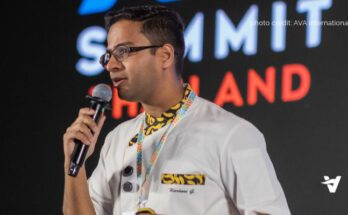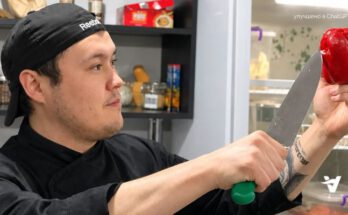
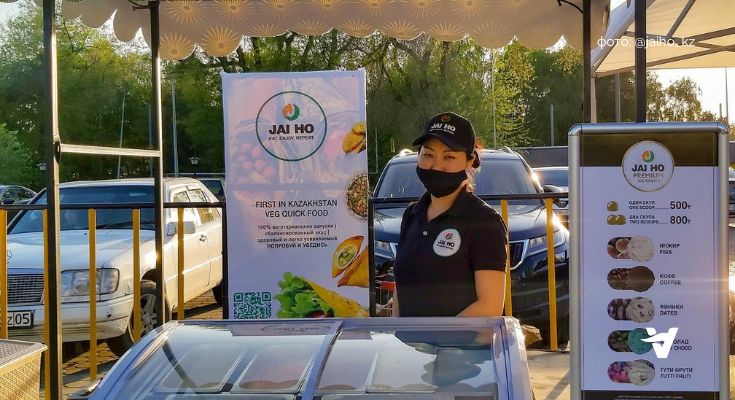
Mukhit Tussupbekov is one of the founders of Jai Ho, a project that introduced Almaty residents to vegetarian cuisine over several years. It became a popular meeting place for vegetarians, vegans and anyone who simply loved good food.
The story of Jai Ho began in 2017. Its three founders — Mukhit Tussupbekov and his partners Kshitish, an Indian who had lived in Kazakhstan for around 25 years, and Kamila — decided to take their business in a completely new direction. Mukhit and Kshitish had previously run a shashlik restaurant in Karaganda, but gradually they came up with the idea of opening a chain of small outlets serving exclusively vegetarian food.
Jai Ho means “Long live victory!” or “Hail!” in Hindi. It’s an exclamation used to express joy, support and triumph.
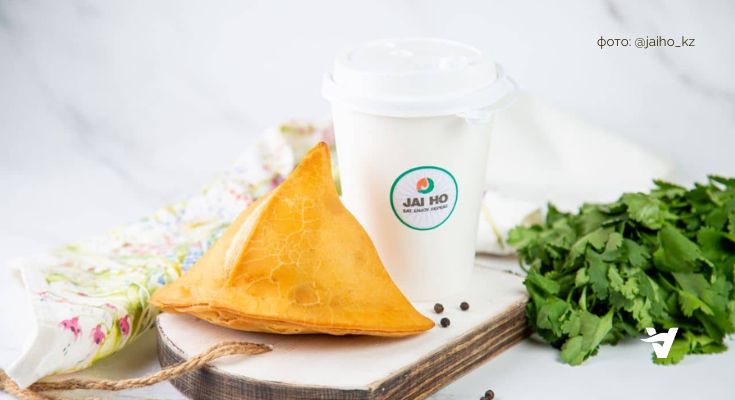
The first Jai Ho outlet opened in Almaty in 2018. The menu featured Indian dishes, samosas, frankies, spinach kachori and masala chai. Smoothies and vegan ice cream were added later. Almost everything on the menu was entirely plant-based.
The project quickly gained support from the local community. Jai Ho collaborated with yoga studios, eco-farms, restaurants, shops and food delivery platforms, eventually growing to five locations across the city.
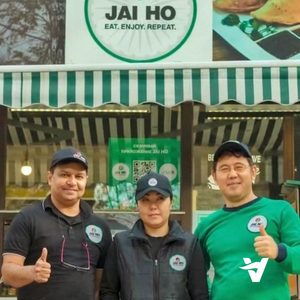
However, the January 2022 events, financial difficulties and the crisis that followed forced the founders to put the project on hold. They spent another year trying to get the business back on its feet, but eventually had to close. In total, Jai Ho was in business for three years, four months and 16 days.
Mukhit now works in the restaurant business in Almaty. We spoke with him about how Jai Ho came about, why vegetarian food found such an enthusiastic audience, what he learned from his customers and why he isn’t ready to bring the project back just yet.
The interview was originally conducted in Russian. In the event of any discrepancies between the English and Russian versions, the Russian version shall prevail.

From Shashlik to an Entirely Vegetarian Business
How did the idea for Jai Ho come about?
Mukhit: This project turned our business around by 180 degrees. Kshitish and I used to run our own shashlik restaurant in Karaganda, and we’d pretty much taken that business as far as we could.
Then one day I was eating shashlik and started choking. Kshitish came to my rescue: a piece of meat had got stuck, he pulled it out, and that’s how I became a vegetarian. Just kidding!
Actually, the idea had been brewing for quite some time. We were travelling to buy equipment, and somewhere on the road from Karaganda to Balkhash I started listing vegetarian dishes. I came up with about 120, maybe even 500. We ended up arguing about how many vegetarian dishes there actually were. Kshitish said there were 30,000 in India alone. I was like, “What do you mean, 30,000?”
That got us thinking. We realised there was hardly any vegetarian food business in Kazakhstan. When we arrived in Almaty, we went to Govinda’s [the first vegetarian café serving Indian cuisine in Almaty — editor’s note], and we really liked it. The food was interesting, the presentation was great — everything was good.
That’s when Kshitish said: “If we’re going to do vegetarian food, we have to do it 100 per cent.” I asked him, “Why?” He said: “Because you wouldn’t store meat next to vegetables — that’s just wrong. And you can’t use a knife that has cut meat to chop vegetables afterwards. If you’re going to do this, don’t do it halfway. It has to be 100 per cent.”
The idea took shape in 2017, and we spent 2018 working on it. We had to decide whether to open in Astana or Almaty. We chose Almaty because things were more progressive here. Astana has those freezing temperatures and crazy winds — what vegetarianism are you going to think about there? You’d be too busy trying to survive! So Almaty it was.
People welcomed us with open arms. We started out with samosas, initially hoping to attract Indian students. And they really supported us. There were around 2,000 Indian students in Almaty, and when the war in Ukraine broke out, another 3,000 arrived. There were suddenly a lot more Indians in the city, and they really helped us out. Gradually, we became part of the local community, and people genuinely embraced the project.
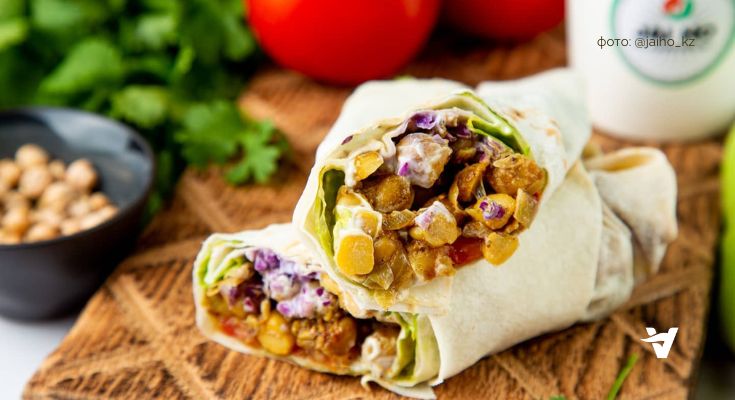
We also served what we called “frankies” — wraps filled with different ingredients and rolled in lavash bread. Finding the right lavash was a real challenge. First, we wanted barley lavash, then we looked for corn and rice versions. It was difficult to find anything suitable in Almaty, so eventually we started baking it ourselves.
When we introduced frankies with cheese, peas, corn, barley and chickpeas, the combination worked really well. But our biggest hit was spinach kachori. They became incredibly popular in Almaty — people would come specifically to buy them. They were our signature dish. And, of course, we had authentic Indian ginger masala chai. It was simply amazing.
Things were going well, and we eventually opened five locations. But the January events [protests that began in January 2022 over rising liquefied petroleum gas prices and escalated into mass unrest, riots and arson in Almaty and other cities across Kazakhstan — editor’s note] wiped out all five outlets, and getting back on our feet was incredibly difficult. Just imagine how much money we’d need to reopen all five locations! And by then, we had practically nothing left.
We found ourselves in a financial dead end, but we kept going for about another year. Eventually, we had to close. Things had become unbearable: all our revenue was going straight to the banks, and there was practically nothing left for us.
Our entire team consisted of the three founders. By the end, we weren’t even paying ourselves — we were only covering the salaries of the cooks and sales staff. I often worked behind the counter myself instead of hiring someone, just to save money.
We were down to our Globus location, and later we moved to the Sharipova–Kurmanғazy intersection. Eventually, we realised we needed to take a break. We found an investor, but the negotiations went nowhere because the overall situation was so uncertain. So we decided to put things on hold.
Why Did Jai Ho Choose Small Outlets?
Why did you decide to open a chain of kiosks rather than one large café?
Mukhit: When I was working behind the counter myself, I had plenty of opportunities to talk to customers. I’d ask them questions: where they lived, what they liked, what they wanted to see on the menu. Many of them felt so comfortable with us that it was almost like coming home.
There are probably a dozen places in the city where you can get really good food. But what made us different was our people.
Our customers included vegetarians, vegans, raw foodists, pescatarians (people who eat fish) and even fruitarians. I was amazed sometimes. Seriously, how do they manage to live on nothing but apples?!
The most memorable customers were definitely the vegans — they loved coming in for a debate. They’d ask a question and answer it themselves, criticise themselves, criticise me, criticise everyone else, and then we’d make up, drink tea, chat, complain about the government and go our separate ways as friends.
It was all part of the experience. I suppose they had a lot bottled up: “You can’t have milk, you can’t eat this, you can’t eat that.” I’d joke: “Are you at least allowed to breathe sometimes?” Of course, not everyone appreciated my sense of humour.
We also had lots of international visitors. We were well known among travel agencies that needed somewhere to take their vegetarian clients. Tourists would complain that everything around them was meat-based, so they’d come to us. We had visitors from New Zealand, Vietnam, the southern provinces of China and, of course, plenty of people from India.
We also worked closely with Tandoor restaurant. They didn’t prepare some of the dishes themselves, so our chefs would make them.
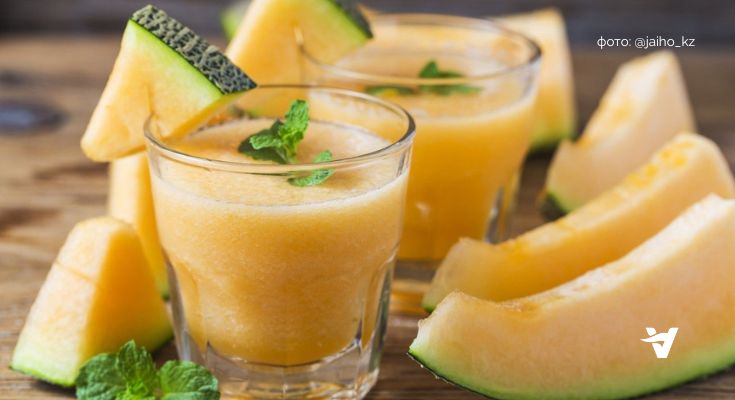
At first, Kshitish did all the cooking himself. He had an excellent understanding of spices. Later, he trained local chefs, and we started adapting some dishes to local tastes and using seasonal ingredients such as pumpkin, melon and watermelon.
Eventually, we added smoothies and vegan ice cream. The project was really something special — incredibly powerful, even. We didn’t want to let it go. We kept fighting to save it until the very end, but eventually we had to accept that we couldn’t carry on.
What Stood in the Way of Further Growth?
Could Jai Ho have grown into a major chain?
Mukhit: Absolutely. If it hadn’t been for the January events, we would have reached the level of KFC, or at least Marrone Rosso [an Italian-style café chain that has been operating in Almaty since 2009 — editor’s note].
By then, we’d developed a pretty good understanding of what local customers wanted. We’d had to learn a lot along the way, and the market taught us its own lessons. We adapted and figured out what our main customers were looking for: food that was quick, high-quality and delicious.
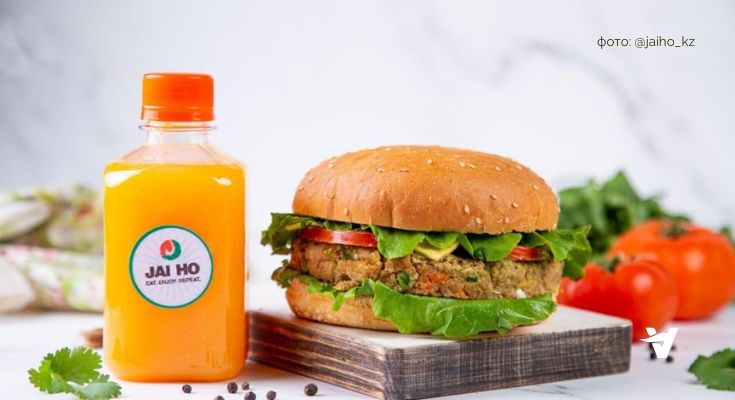
We were already working on a new concept with calorie counts and nutritional information, including protein, fat and carbohydrate content. We wanted to move beyond strictly vegetarian cuisine and focus more broadly on healthy eating without meat. We’d even started experimenting with soy meat.
Here’s something you might find surprising: apparently, Chinese companies are growing soybeans in fields around Taldykorgan. Some of the highest-quality soybeans grow right here in Kazakhstan. I found this out while working at Jai Ho. The Chinese told me themselves: “We’ve come here to buy soybeans.” And then they sell them back to us at five times the price!
They lease fields for 99–100 years and grow soy here because our soil is still fertile. In China, they exhaust their soil after three or four growing seasons, whereas here the land gets a season to rest and recover. Our soybeans contain a lot of selenium, which is a very important element, and earthworms help produce it during the winter. It’s a natural cycle that the Chinese really appreciate.
How did running a vegetarian business change you?
Mukhit: All of us changed for the better. It turned out that vegetarian food really broadens your horizons.
We had so many creative people among our customers. I think the explanation is quite simple: when an animal is killed, it involves a lot of negative emotions, and those emotions have a strong effect on people who eat meat.
Take boxers and kickboxers, for example. There are no vegetarians among them — they all eat meat, and you can see that toughness reflected in their personalities. [In fact, there are vegetarians and even vegans in these and other sports. One of the best-known examples is Mike Tyson. — Editor’s note] And then look at gymnastics: around 70 per cent of athletes follow a vegetarian diet. [This figure is Mukhit’s own estimate. However, there are indeed quite a few vegetarians among professional gymnasts. — Editor’s note]
A Belief or a Way of Life?
Did you become a vegetarian yourself? And do you still follow a vegetarian diet?
Mukhit: Well, with varying degrees of success! I sometimes do light fasts or have days when I eat very little.
We used to joke about it, actually. Our kitchen staff were all Kazakh cooks, and when one of them had a birthday, you couldn’t exactly tell everyone: “Right, let’s all be vegetarians today!”
But there’s a wolf living inside you. It sees meat and starts howling: “Awooooo!” And you think to yourself: “Damn, I guess I’m not going to be a vegetarian today.”
So your vegetarianism depends on the situation?
Mukhit: Exactly. At work, during the day, we’re vegetarians. Outside work, we’re those wolves!
Did vegetarianism become part of your identity?
Mukhit: Definitely. It became something of a trademark — that’s how people knew me.
For example, when Sandip calls [founder, director and lead teacher at the Pradnya Institute of Yoga in Almaty — editor’s note], my number comes up in his phone as “Vegetarian” or “Jai Ho”.
Life After Jai Ho
Tell us about what you’re working on now.
Mukhit: Until recently, I was a co-owner of a small restaurant called Chai & Sweets. We opened it together with Nitin, who is also Indian. It has a mixed menu, with both vegetarian and meat dishes. By the way, their vegetarian pizza is genuinely delicious, and the dough contains no animal products.
We called it Chai & Sweets because the original idea was to focus on sweets. But things evolved, and now we have proper dining areas and serve Indian food, mainly Punjabi cuisine.
I’ve since sold my share in Chai & Sweets. I realised it just wasn’t for me. People in Almaty strongly associate me with vegetarianism, and trying to be involved in something different turned out to be much harder than I expected. I couldn’t really be two different people.
Advice for Those Just Starting Out
What advice would you give to someone who wants to start a vegan or vegetarian food business?
Mukhit: Just go for it. Open your business, give it a try and be prepared to take risks. You won’t know whether it works until you actually try. It’s better to make one mistake than to spend all your time planning a thousand times over.
Making mistakes is an inevitable part of the journey, and there’s nothing wrong with that. Even if we stumble over our words somewhere in this interview, that’s fine. It’s all part of the process.
I used to think everything had to be perfect, that you had to be a perfectionist. Hell, no!
I’m telling you honestly — I’ve learned this the hard way. That’s just how life works. You can’t avoid making mistakes.
Is there still a future for Jai Ho?
Mukhit: Jai Ho is still on hold, but we haven’t given up on the project.