
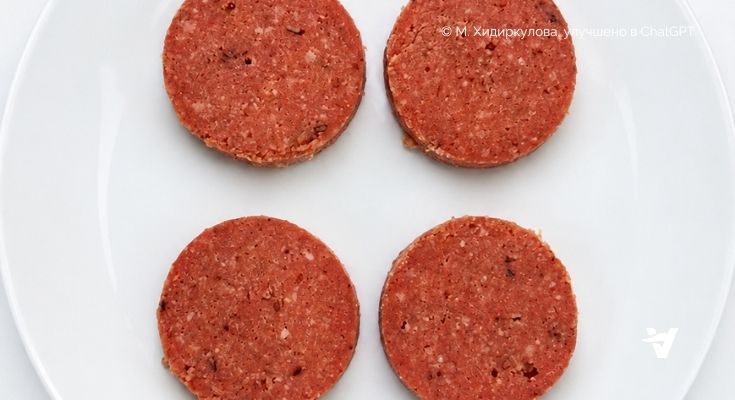
Maftuna Khidirkulova is a food technologist with nine years of experience and is currently pursuing a PhD at the Tashkent Institute of Chemical Technology. Her research focuses on alternative proteins, and she has decided to turn her academic work into a practical project: developing a vegan sausage made primarily from locally sourced ingredients.
Maftuna describes herself as a flexitarian: she consciously reduces her meat consumption and focuses on a plant-based diet. In developing the product, she aims to combine a familiar format, high nutritional value, and ingredients available in Uzbekistan. The sausage is currently undergoing testing, and in the future, the project’s creator plans to launch a small production facility and bring it to the CIS (Commonwealth of Independent States) market.
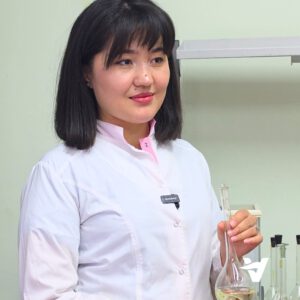
food technologist and PhD candidate at the Tashkent Institute of Chemical Technology
I spoke with Maftuna about how plant-based sausage is being developed in Tashkent, why local ingredients do not always mean lower production costs, and whether a product like this could change people’s attitudes toward plant-based eating in the region.
The interview was originally conducted in Russian. In the event of any discrepancies between the English and Russian versions, the Russian version shall prevail.
Aliya Wedelich for Veganstan News
How did you come up with the idea of creating a vegan sausage specifically? Why did you choose this topic for your dissertation?
Maftuna: I love exploring new horizons. Alternative proteins are a global trend, and I wanted to do more than simply write a dissertation that would end up in an archive. I wanted to solve a real-world practical problem: create a high-quality Food-Tech product right here in Uzbekistan.
How is your product different from other plant-based sausages? What makes it special?
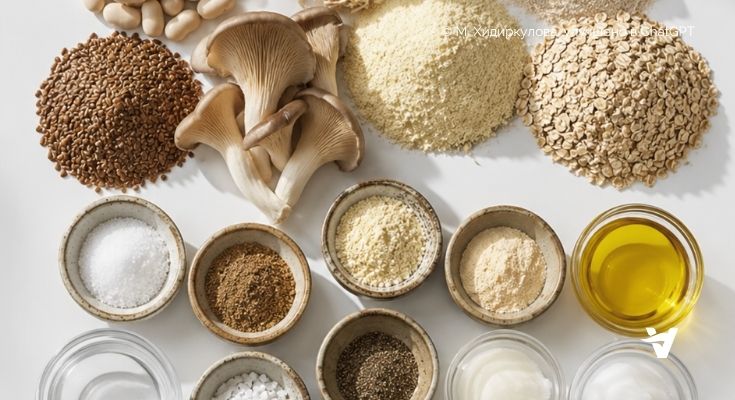
Maftuna: Our product is 80% made from locally sourced ingredients. It contains no soy or GMOs, while still providing all nine essential amino acids. It is suitable for vegans, people who fast, and anyone who chooses a healthy lifestyle. We are creating it for health-conscious moms in Tashkent — thanks to its clean ingredient list, it is suitable for the whole family; office workers — as a filling snack; athletes — as a source of protein for recovery; and eco-tourists — as a unique Food-Tech product from Uzbekistan.
In addition, the development is based on FAO and WHO Codex Alimentarius standards (the Food Code, a collection of international standards, guidelines, and codes of practice relating to food products — editor’s note) and four UN Sustainable Development Goals: zero hunger, good health and well-being, responsible consumption and production, and climate action.
What turned out to be the most difficult part of the development process? Achieving the right taste, texture, or high nutritional value?
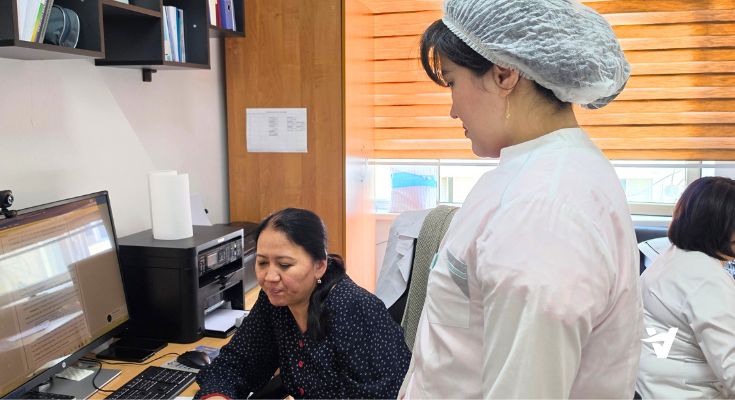
Maftuna: It is difficult to recreate the right “meat-like” texture without specific ingredients that are not readily available here. The second problem is access to professional equipment: renting it is expensive, and no one works with young scientists on a barter basis.
The product is currently undergoing testing. What are its prospects going forward? Will we ever see it on store shelves?
Maftuna: We plan to launch a small production facility with three to four employees and enter the CIS market by 2028. We will work through HoReCa channels (the hotel and restaurant industry — editor’s note), retail (shops and delivery), and eco-festivals. My dream is to adapt and produce the most interesting vegan innovations from around the world in Tashkent.
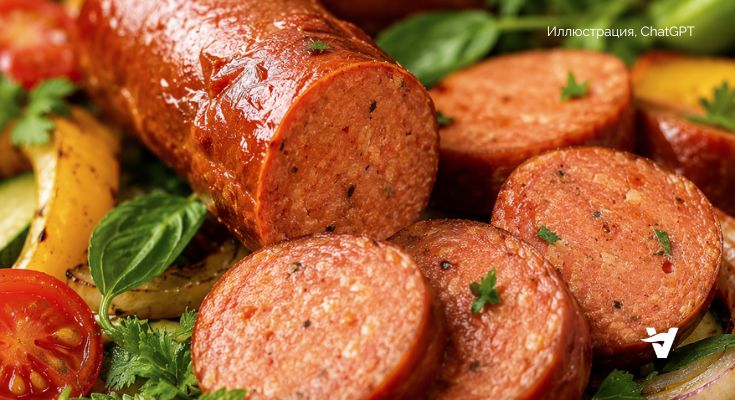
Do you think products like these can change people’s attitudes toward plant-based eating in our region?
Maftuna: They already are! The success of establishments such as Organic Food, Biorganic, Touch of Matcha, and Artha proves that Tashkent is seeing rapid growth in the culture of mindful eating and demand for healthy alternatives.
Many people believe that high-quality plant-based products are expensive and almost always imported. Does your project show that they can also be made from local ingredients in Central Asia?
Maftuna: They can and should be made here. The high cost is not due to local wheat or chickpeas, but to the technologies required for their deep processing without GMOs and the cost of renting equipment. Nevertheless, our mission is to offer a fair price so that healthy sausage is affordable not only in the capital but also in the regions.
