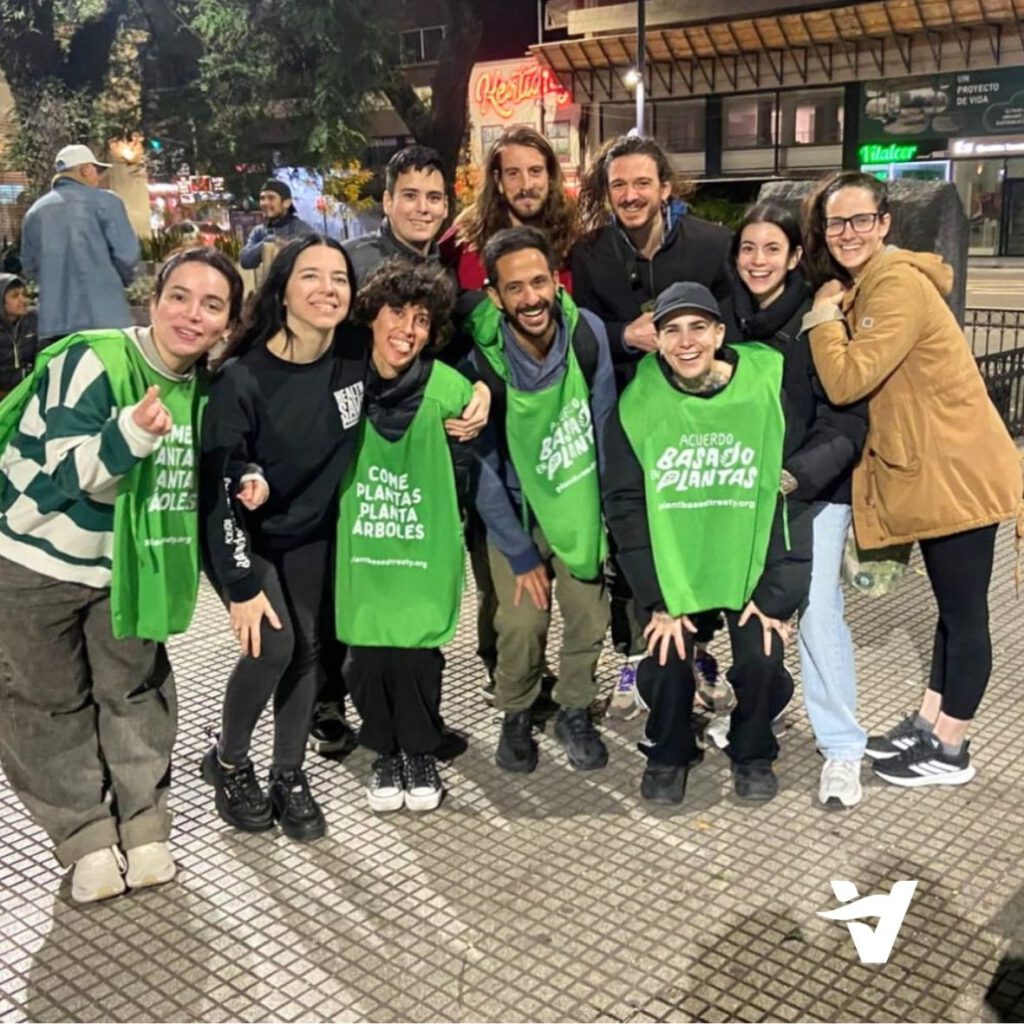
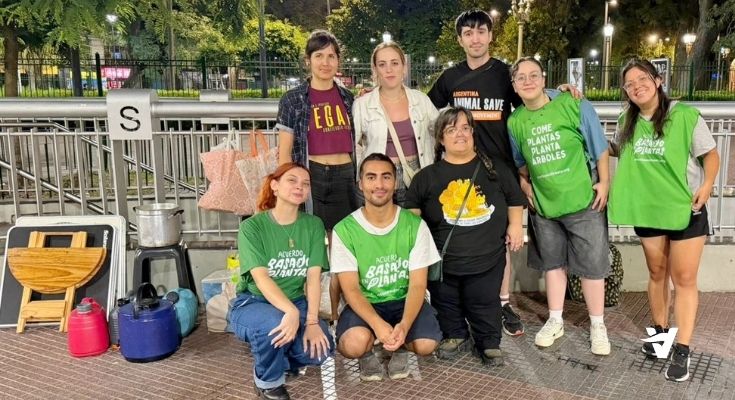
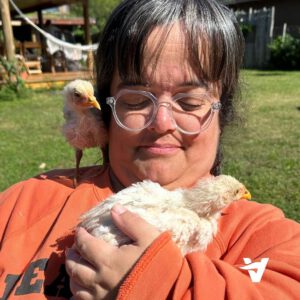
This is Jimena “Jime” Zamora. She lives in Buenos Aires, has eight cats, and has been vegan for over ten years—after 12 years of being vegetarian back when information wasn’t as accessible as it is today. Working alongside a dedicated team of around 100 volunteers, she is passionate about fighting for animals every day, in whatever way she can.
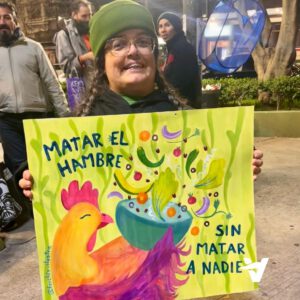
As Argentina’s country liaison for the Plant Based Treaty, Jimena puts that passion into action on the ground. Beyond training restaurants and universities, a significant part of her work takes place directly on the streets and in community soup kitchens (ollas populares). Her team works with community kitchens, helping them transition to plant-based menus, while also preparing and distributing plant-based meals directly to people experiencing food insecurity. Over nearly eight years, her team has served approximately 200,000 meals to people in need.
The years of hands-on activism have proven that plant-based food isn’t a luxury. When done right, it is healthy, affordable, easy to scale, and deeply nourishing for communities in need. Here is how they make it happen.
Aliya Wedelich for Veganstan News
Partner with Community Soup Kitchens
In Argentina, many community soup kitchens provide essential meals to vulnerable families, but historically, none were fully plant-based. Instead of asking kitchens to change overnight, Jimena’s team took a supportive, collaborative approach:
Build Trust with Food Tastings
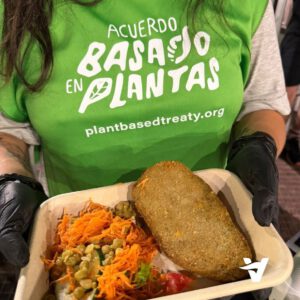
The team made initial contact by bringing delicious, traditional vegan dishes for the organizers and attendees to sample. Showing up with great food opened the door for conversation.
Bring in Experts to Answer Questions
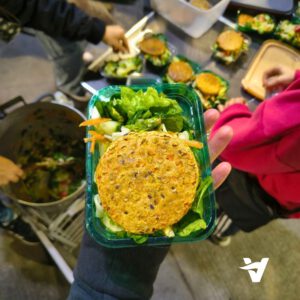
Jimena and her colleagues partner with nutritionists. This allows them to explain the health benefits of plant-based eating clearly, address common concerns, and show how nutrient-dense ingredients like legumes and soy keep meals budget-friendly and satisfying.
Empower with Practical Tools
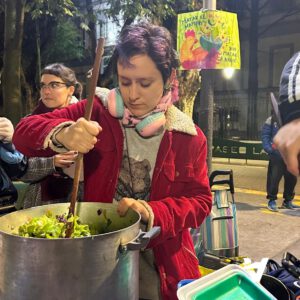
They provided accessible recipe books featuring dishes that are easy to make in large batches. In one particularly inspiring case, a soup kitchen even started its own community garden to grow fresh ingredients for its pots.
Make Street Outreach Count
For the past eight years, Jimena’s team has been preparing and serving 100% plant-based meals directly to people experiencing homelessness or food insecurity. Their street initiative focuses on three core principles: keep it local, keep it simple, and make it delicious.
Empower a Volunteer Team
Cooking massive amounts of food requires clear coordination. Give volunteers the recipes, tools, and nutritional knowledge they need to feel confident both in the kitchen and when chatting with the community.
Stay Organized with Clear Schedules
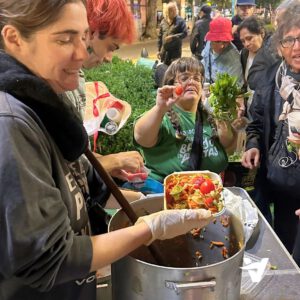
Large-scale cooking only works with structure. Set up a clear calendar of dates, assign specific tasks, and choose well-balanced recipes ahead of time so the whole team operates smoothly.
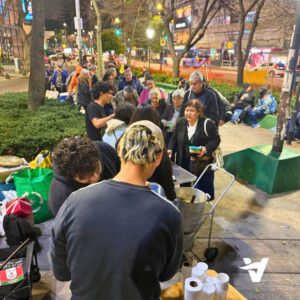
Rescue Surplus Food
To cook dozens of kilos of food affordably, partner with local companies and startups. Sourcing excess production prevents good food from going to waste while feeding hundreds of people.
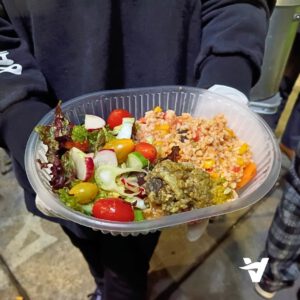
Change Minds Through Shared Meals
Jimena is certain that, at their core, both street outreach and soup kitchen partnerships are about human connection. Rolling up your sleeves, cooking a hot meal, and sharing it with someone is the most direct way to demonstrate the power of plant-based food. When people experience firsthand how filling and delicious these meals are, misconceptions melt away—one bowl at a time.
You can listen to Jimena’s presentation in the recording of the Plant Based Treaty webinar, “Menu Change Training.”